
Bid Evaluation
Evaluation
6/19/20253 min read
What SMEs Need to Know
In the competitive world of public sector procurement, understanding how tenders are evaluated and scored can make the difference between success and rejection. For SMEs looking to win government and local authority contracts, a solid grasp of the evaluation process is essential - not only to meet basic compliance but to build compelling, high-scoring bids. At Bid Capture, we work with SMEs to demystify the scoring process and improve their ability to compete with larger, better-resourced suppliers.
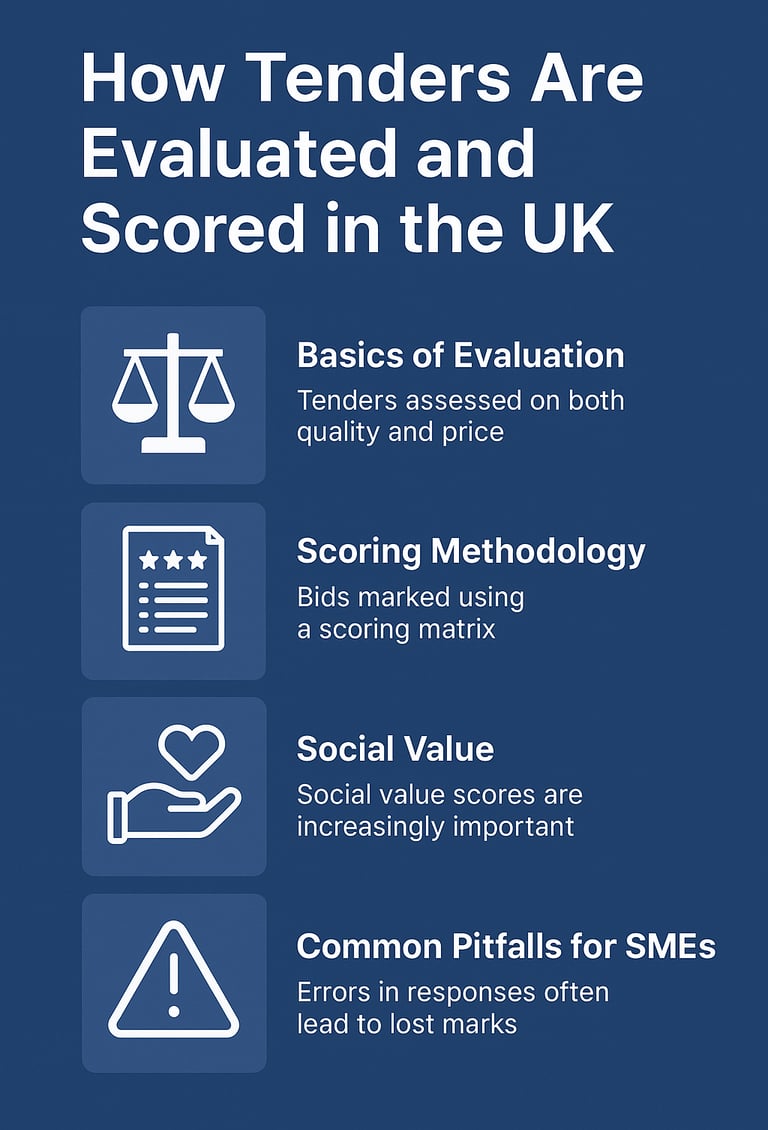
The Basics of Bid Evaluation
In the UK, public sector tenders are generally assessed using the Most Economically Advantageous Tender (MEAT) approach. This means that bids are scored not only on price, but also on quality, value for money, and how well they meet the authority’s needs. Typically, tenders are scored in two parts:
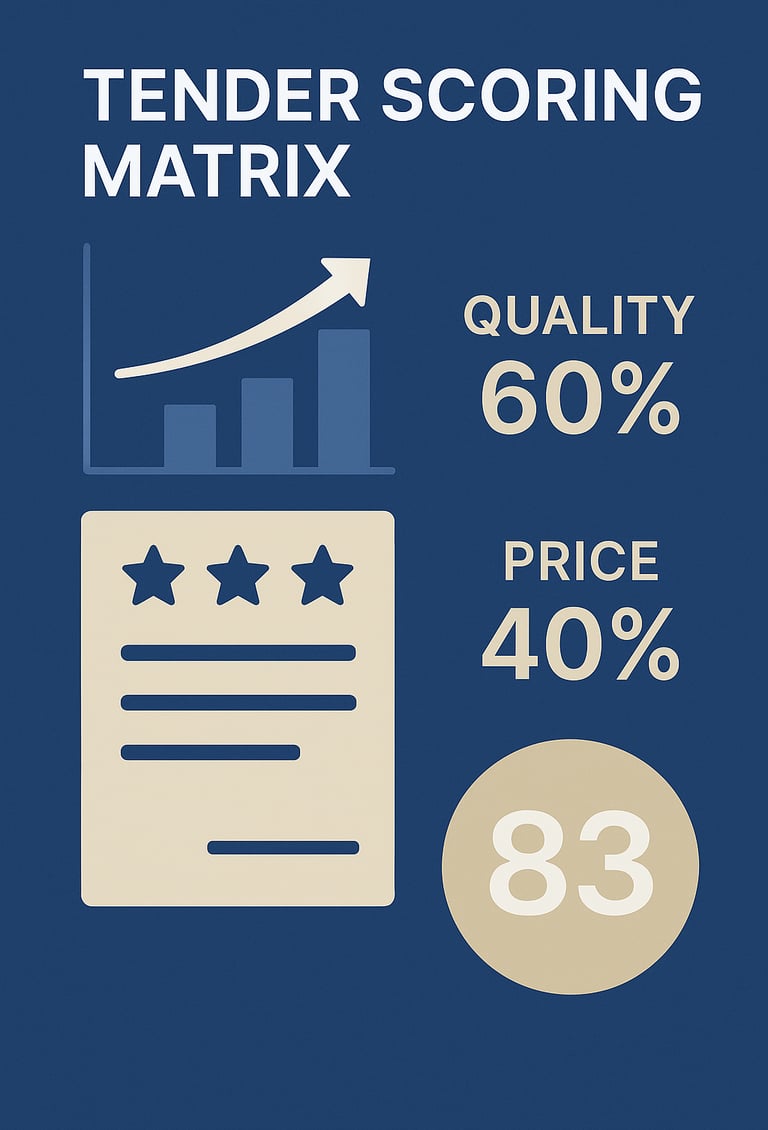
Quality (Technical/Methodology/Social Value): This can account for 60-80% of the total score.
Price (Commercial Offer): Usually makes up 20-40%, depending on the contract type.
The buyer will publish the evaluation criteria in advance - usually broken down into scored sections or questions, each with a weighting (e.g. 25% for Methodology, 15% for Mobilisation, 10% for Social Value, etc.). Understanding these weightings is critical: they signal which parts of your bid to focus most effort on.
Scoring Methods and Thresholds
Each question is marked using a published scoring matrix, typically on a 0-5 or 0-10 scale. For example:
0 = Unacceptable / No Response
3 = Acceptable / Meets Requirements
5 = Excellent / Exceeds Requirements with added value
To score highly, your responses must not only be compliant, but also well-evidenced, tailored, and proactive in adding value. Buyers are looking for clarity, confidence, and a deep understanding of the specification.
Some bids also include minimum scoring thresholds (e.g. a minimum of 3 out of 5 per question). Failing to meet these can lead to automatic disqualification - even if your price is competitive.
Social Value - A Scoring Area Not to Ignore
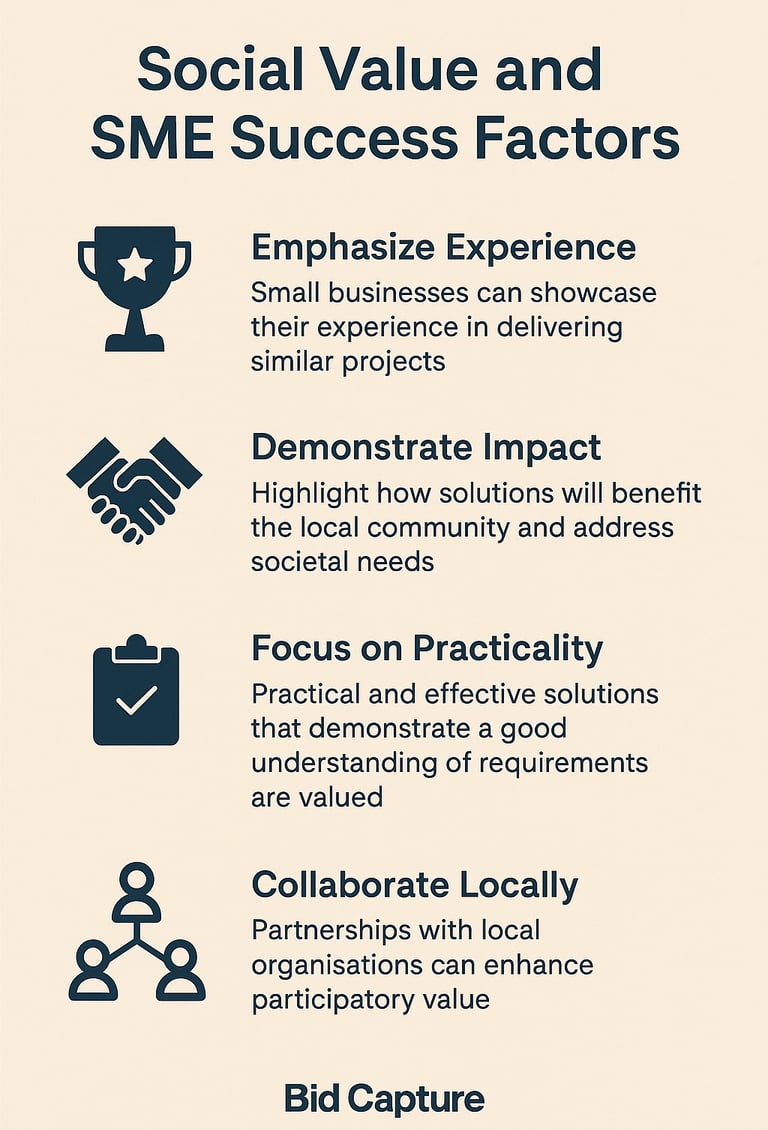
Since the launch of the UK Government’s Social Value Model, social value is now a mandatory consideration in most public tenders. This can account for 10% or more of the overall score. Buyers are looking for tangible, contract-specific commitments in areas like sustainability, diversity, apprenticeships, or community engagement. Generic promises or boilerplate answers won’t score well.
SMEs may feel at a disadvantage here, but the key is to align your social value offer with your size and service - showing how you can deliver real, localised impact.
Common Pitfalls for SMEs
Despite being capable and competitive, many SMEs lose marks unnecessarily due to avoidable mistakes. These include:
Failing to answer the question directly or copying from previous tenders without tailoring.
Not evidencing claims: saying you deliver high quality or innovation isn’t enough; you must prove it.
Weak structure or clarity: evaluator fatigue is real. Disorganised responses get lower scores.
Overemphasis on price: some SMEs underprice without demonstrating value, risking unsustainable bids or low quality scores.
Underestimating evaluation criteria: focusing efforts on less-weighted sections.
How Bid Capture Can Help
At Bid Capture, we help SMEs maximise their scores by aligning their responses with the evaluation criteria and buyer expectations. We provide expert support in bid writing, pricing strategy, and quality assurance - ensuring your tender isn’t just compliant, but highly competitive. From dissecting the scoring matrix to drafting evidence-rich content and articulating social value, our team gives you the insight and capacity to improve your win rates.
If your business wants to win more tenders but struggles with scoring consistently, we can help. Contact us today to discuss how we can support your next opportunity.
BidCapture
Expert bid writing and management solutions.
Contact
Subscribe to our Newsletter
© 2025. All rights reserved.